
Last updated November 24, 2026
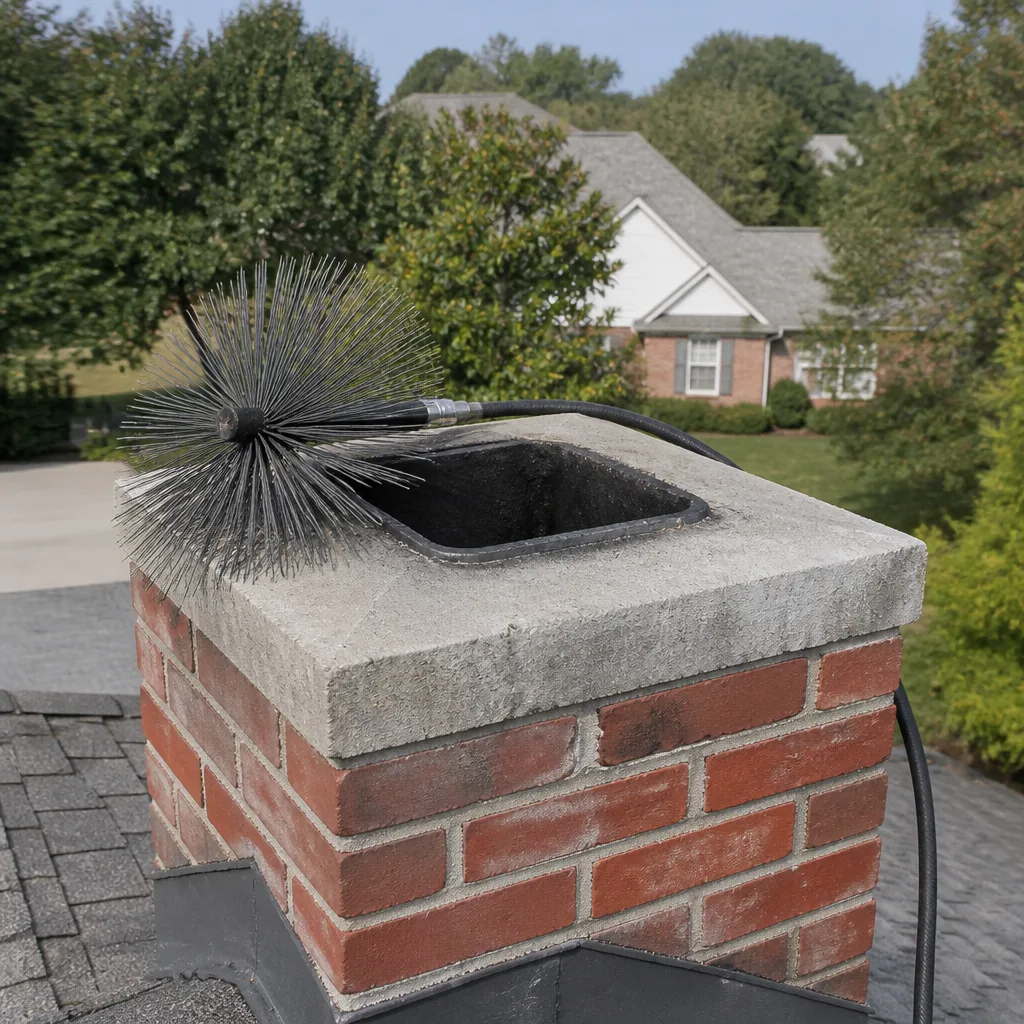 Sweep & inspection
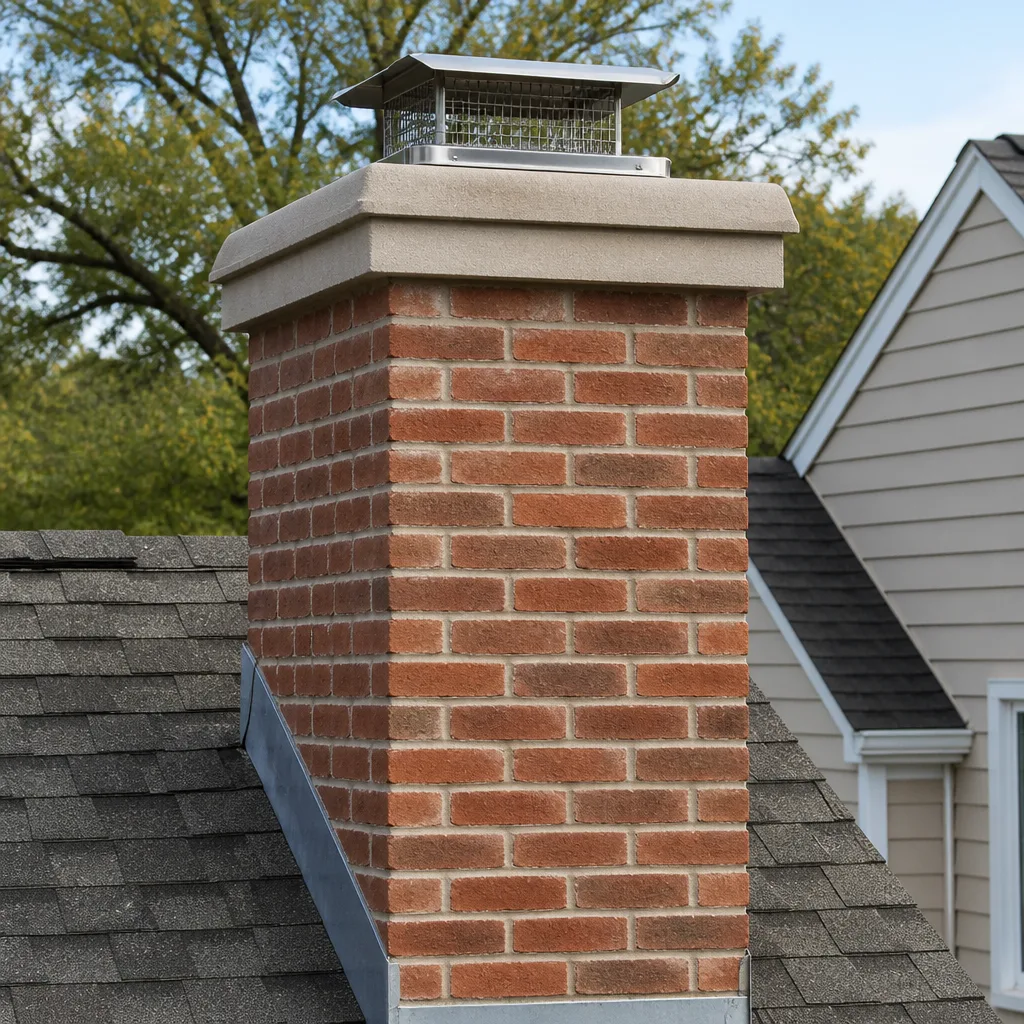 Caps & crowns
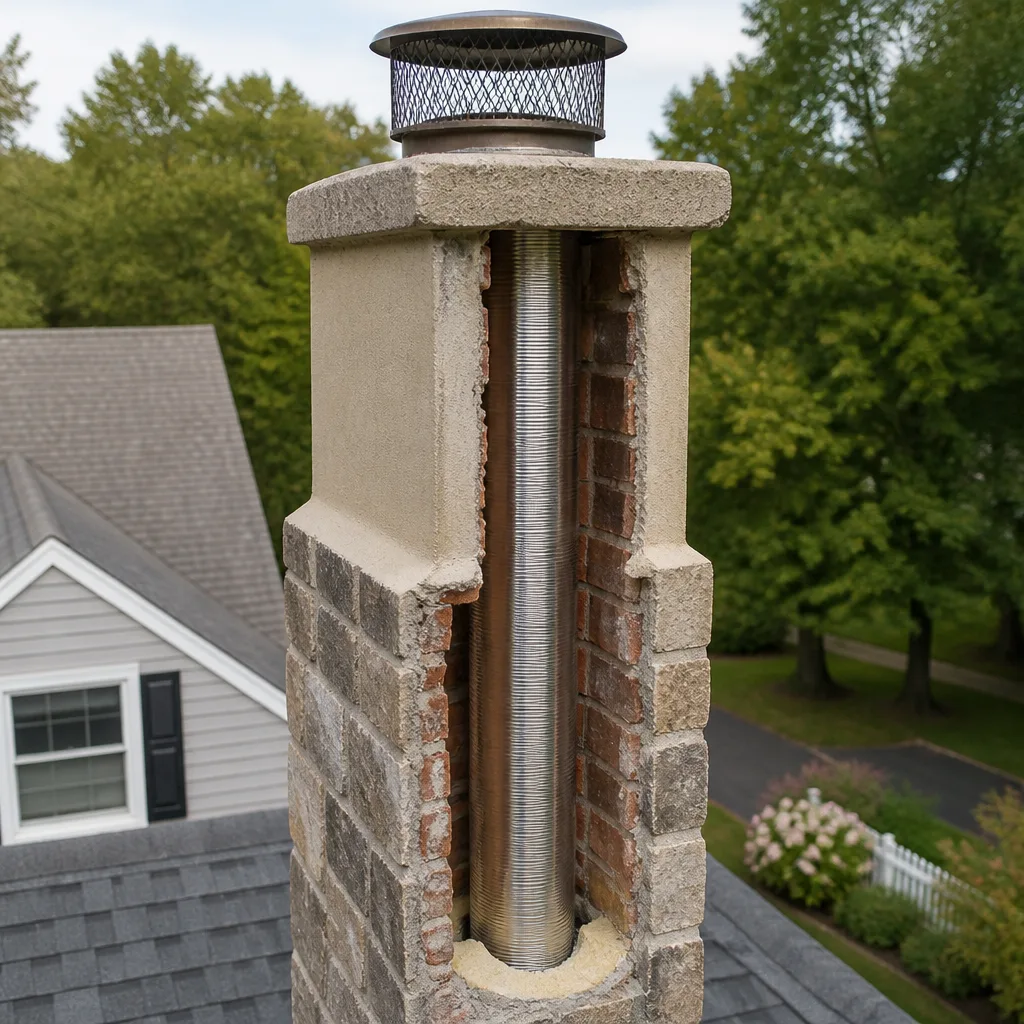 Flue relining
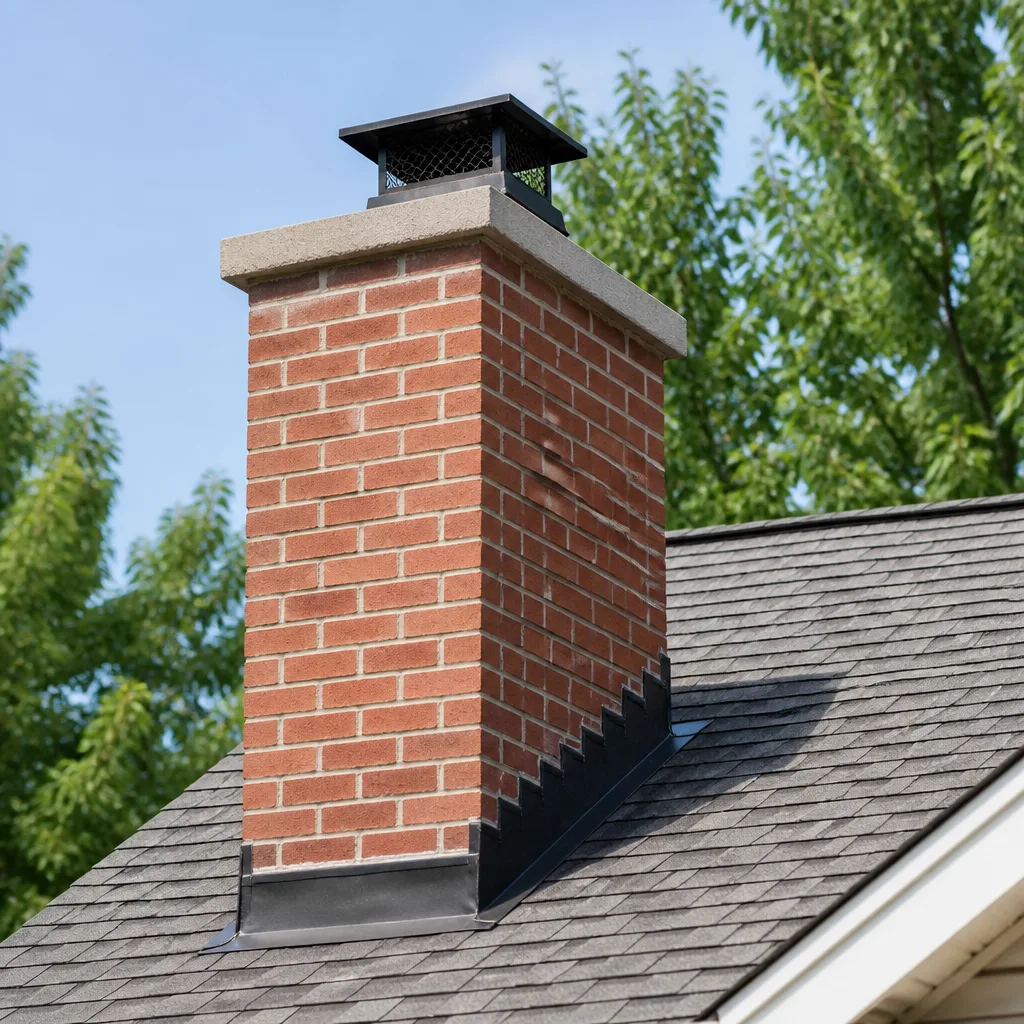 Masonry repair
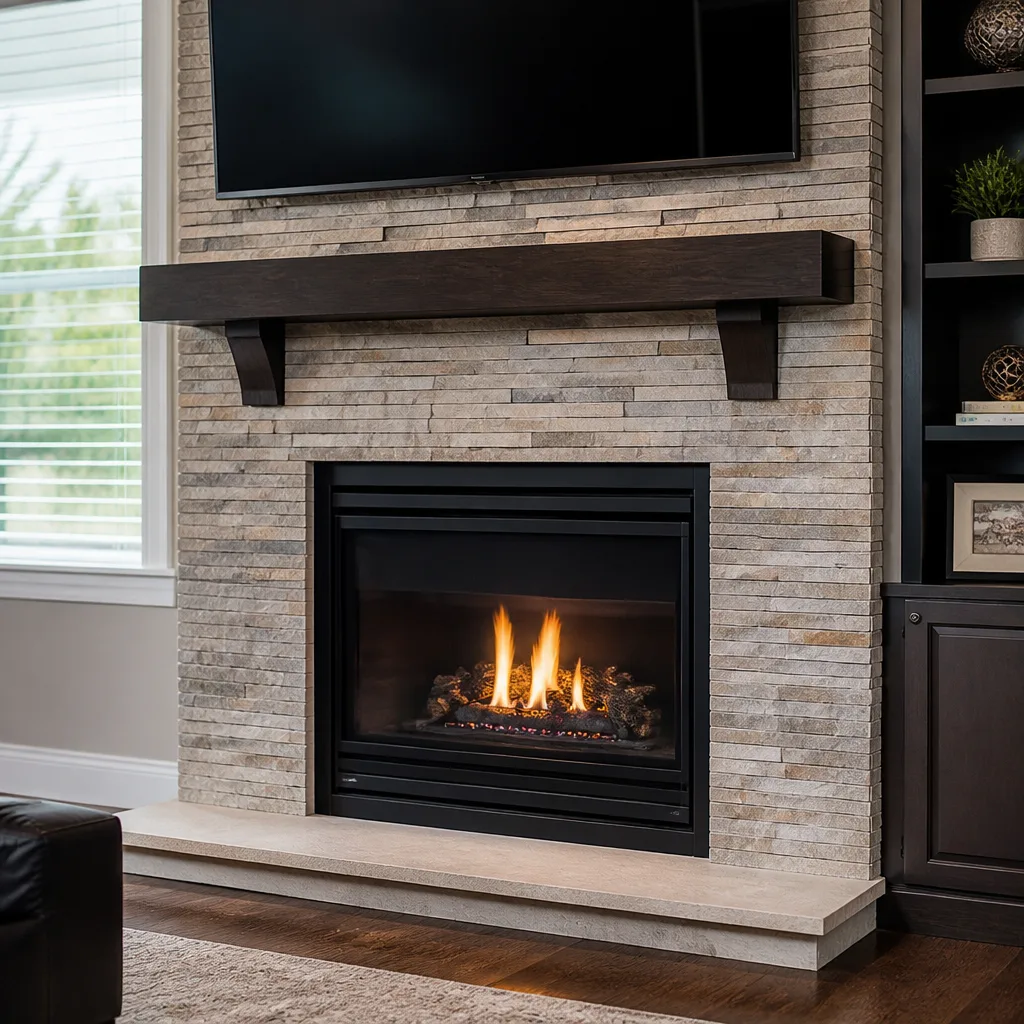 Gas fireplace service
Level 1 sweep and inspection to the NFPA 211 annual standard - flue, crown, cap, and flashing checked and photographed
Chimney sweep logs do not sweep chimneys. They loosen some creosote - which then falls where a brush and vacuum still have to collect it.
The Complete Guide to Chimney Cleaning in Kirkland
Most chimney fires don’t start because a homeowner skipped a cleaning. They start because the cleaning happened without anyone reading what the creosote pattern was telling them. A flue packed with glazed, tar-like deposits looks the same to an untrained eye whether it was swept last spring or never. What matters is what those deposits reveal about how you burn, what the venting is doing, and how Kirkland’s wet climate is working on the masonry around it. This guide walks through the whole system from the firebox to the crown, explains which inspection level you actually need, and shows you how to read a sweep’s report well enough to tell an urgent repair from an upsell.
Quick Answer
Chimney cleaning in Kirkland is a professional sweep of the flue combined with a visual inspection of the full system, and most wood-burning fireplaces need it once a year or after roughly a cord of wood. It matters more here than in dry climates because the same moisture that grows moss on Kirkland rooflines also works its way into mortar and accelerates liner wear between cleanings.
Styles & brands we work with
- Sweep & inspection
- Caps & crowns
- Flue relining
- Masonry repair
- Gas fireplace service
Table of Contents
- Why Kirkland’s Climate Changes How a Chimney Ages
- Level 1, Level 2, and Level 3 Inspections
- How Wood Type Affects Creosote and Cleaning Frequency
- What a Full Chimney System Includes
- How to Read a Sweep’s Report
- What Happens During a Professional Cleaning
- Repairs You May Hear About, and What They Involve
- Common Mistakes to Avoid
- When to Call a Professional
Why Kirkland’s Climate Changes How a Chimney Ages
A chimney in a dry, cold climate deals mostly with one enemy: creosote. A chimney in Kirkland deals with two. Alongside the normal buildup inside the flue, the wet side of the masonry is being tested year after year by rain, foggy mornings off the lake, and long damp stretches where nothing dries out completely. This is the single biggest reason a cleaning schedule that works in a guide written for Spokane or Albuquerque is a poor fit for the Eastside.
The mechanism is straightforward once you picture it. Masonry is porous. When a brick and mortar joint absorbs water and then freezes, the water expands and pushes at the mortar from the inside. Over enough cycles this is what causes mortar spalling, where the face of the joint powders, crumbles, and drops away. Once the joints start to lose their grip, the whole structure is quietly weakening, and water has an easier path to the inside. On the flue side, sustained damp can speed up the corrosion of the metal components and the deterioration of a clay liner that was never meant to sit soaked.
Kirkland’s moss-prone rooflines are a useful early warning. If you’re seeing green on the shingles and on the chimney stack, that moisture is doing the same thing to your masonry. It’s why we look at the crown and the flashing on every job, not just the flue. When the cap is missing or the crown is cracked, rain goes straight down the chimney, which happens to be the one direction it should never go.
Level 1, Level 2, and Level 3 Inspections
Not every Kirkland homeowner needs the same depth of inspection, and a sweep who tells you otherwise is either overselling or guessing. The industry draws a clear line between three levels, and understanding that line is the best protection you have against being told you need thousands of dollars of work you can’t verify.
Level 1 is a visual check of the readily accessible parts of the chimney and venting with the tools normally used for a routine sweep. It’s what a standard annual cleaning includes. You need a Level 1 if your chimney has been serviced regularly, you’ve had no changes to the system, and you burn clean.
Level 2 goes further. It’s still visual, but it includes accessible portions of the attic, crawlspace, and other areas reachable without cutting into the structure, and it often involves a camera to look down the flue. You need a Level 2 when:
- You’ve just bought the home and don’t know its service history.
- You’ve changed fuels, swapped to a gas appliance, or added a new insert.
- There’s been a chimney fire or a suspected one.
- You’ve had a major weather event or an earthquake.
- The appliance hasn’t been used in a long stretch and you’re bringing it back into service.
Level 3 is a diagnostic inspection of concealed parts of the system and may involve removing a portion of the chimney’s structure. It’s reserved for situations where a hidden problem is strongly suspected.
For a typical Kirkland home that gets swept regularly, you’re usually in Level 1 territory. A recent purchase or a fireplace that sat unused through several wet winters is where Level 2 earns its keep.
How Wood Type Affects Creosote and Cleaning Frequency
The wood you burn shapes the creosote you get, and the Pacific Northwest offers a specific menu: alder, Douglas fir, and cedar are staples here. Each burns differently, and each leaves a different signature in the flue.
Cedar and other resinous softwoods burn hot and fast and can leave sticky, unburned residue because the fire is over before the flue warms up properly. Fir is a solid heat producer and, when well seasoned, gives a cleaner burn. Alder is a common local hardwood, pleasant and steady, but like any wood it produces creosote if it wasn’t dried down before burning. The wood type matters less than two other things: seasoning and burn temperature. Wet wood makes a cool, smoky fire. A cool fire makes more creosote. That’s the whole equation.
Creosote comes in stages that a sweep can read and most homeowners can’t:
- Stage 1 is a light, sooty fluff. Easily brushed off.
- Stage 2 is flaky and crusty. Tougher, but removable with the right tools.
- Stage 3 is glazed, hard, and tar-like. This is the dangerous stage, and brushing alone won’t always clear it.
If a chimney shows Stage 3 buildup, it’s a sign the burning habits or the venting are wrong, and resurfacing or relining may come into the picture. We use materials like HeatShield to address liner damage that a plain sweep can’t fix, and it’s exactly the kind of repair a homeowner needs to see evidence for before agreeing to it. The takeaway: the wood in your rack is part of your cleaning schedule. Season it, and keep it dry.
What a Full Chimney System Includes
Here’s where most cleaning guides lose the plot. They talk about the flue as if it’s the entire chimney. It isn’t. A chimney is a system, and a sweep who only brushes the flue is only looking at one part of it. The full system runs from the ground up:
- Firebox – where the fire actually lives, and where cracks in the brick or gaps in the refractory can let heat escape into the surround.
- Damper – controls the draft. A stuck-open damper loses heat; a stuck-closed one sends smoke into the room.
- Smoke chamber – the sloped area above the damper. It’s easy to neglect and a common place for creosote to collect out of sight.
- Flue liner – the passage the smoke travels through. Damage here is a venting and safety problem, not a cosmetic one.
- Crown – the concrete top that crowns the stack. A cracked crown is the number-one way water gets in.
- Chimney cap – the fitted cover over the flue. It keeps rain, animals, and leaves out, and it’s the cheapest protection on the whole system.
- Flashing – the seal where the chimney meets the roof. It’s where roof leaks around a chimney usually start.
This is why we treat the chimney like a system. Cleaning the flue while the crown crumbles and the cap is missing is only half the job. When we point out a damaged crown or a missing cap, it’s not because we want the extra work. It’s because a wet chimney is a deteriorating one, and the water damage costs more to fix than the cap would have. Professional-grade materials and components, from DuraFlex liner systems to Copperfield caps, are the difference between a repair that lasts through Kirkland’s wet seasons and a patch that doesn’t.
How to Read a Sweep’s Report
This is the section that saves people the most money. A good sweep’s report should tell you, item by item, what was observed, what it means, and how urgent it is. Read it like a checklist, not a verdict.
Start by confirming the evidence. Any recommendation for a repair should be backed by something you can see: a photo inside the flue, a condition assessment, a clear description of the defect. If a report says you need a new liner but shows no evidence of one, ask to see it. Nothing should be recommended without camera evidence you can see yourself. A sweep who can’t show you the problem cannot honestly ask you to fund the fix.
Then sort each line into one of three buckets:
- Urgent – a defect that’s a genuine safety hazard right now. Damaged liner, cracked firebox, heavy Stage 3 creosote, a blocked flue. These get handled before the next fire.
- Preventive – something sound today that will fail under our climate sooner or later. A cracked crown, a missing cap, minor flashing wear. Doing it now costs less than doing it after damage spreads.
- Optional or cosmetic – a tidy-up rather than a fix. Not nothing, but it can wait.
The real protection against an upsell is a sweep who’s willing to tell you plainly when work can wait. That’s the report we aim for, and it’s what you should expect from anyone you hire in Kirkland. If a report is vague, ask questions. If you get pressure without pictures, get a second opinion.
What Happens During a Professional Cleaning
A proper cleaning is a controlled operation, not a quick brush. Here’s the sequence you can expect, and what makes each step matter in a Kirkland home.
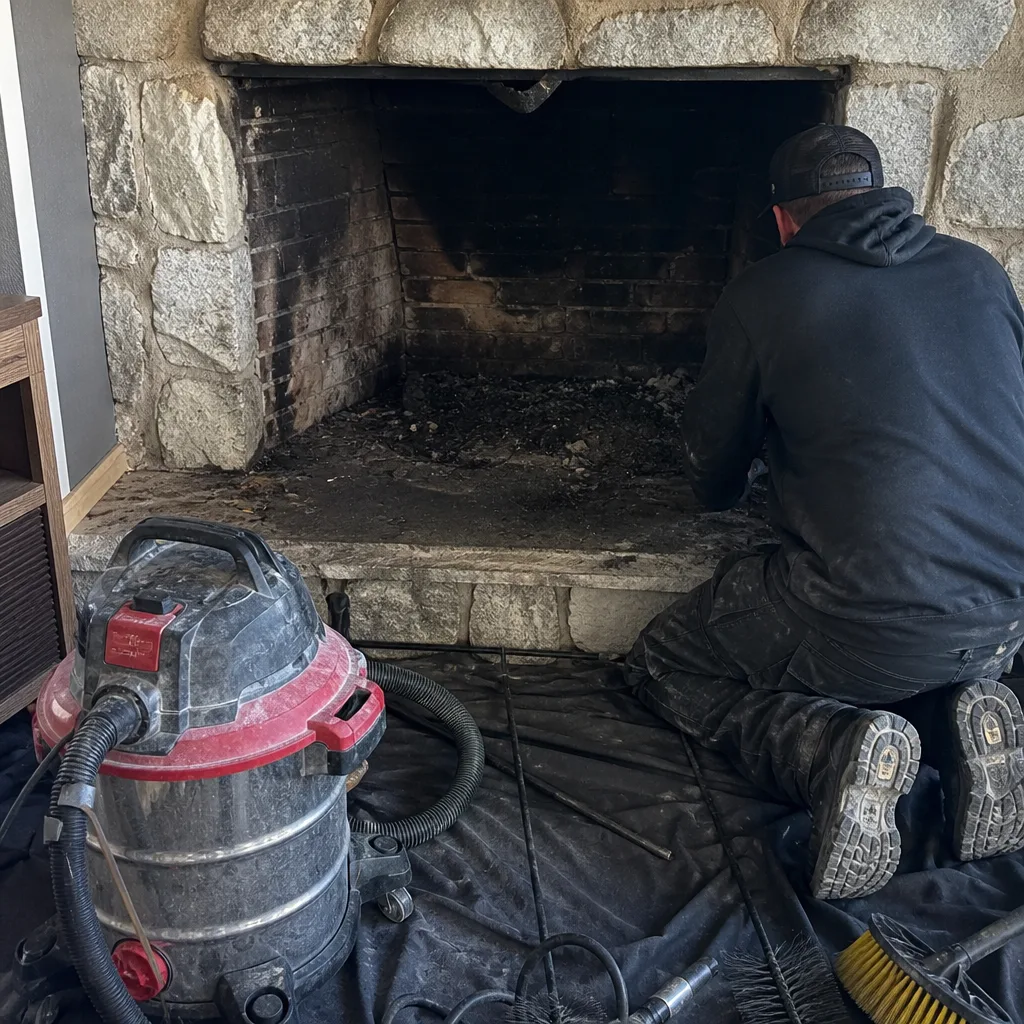
- We set up floor and hearth protection and lay drop cloths so soot stays contained.
- We inspect the firebox, damper, and smoke chamber visually before touching anything, because you can’t clean what you haven’t looked at.
- We brush the flue with the right tool for the liner material, section by section from the top down.
- Any removable components are cleaned as needed, and the firebox is vacuumed out.
- We run a camera inspection where a Level 2 is warranted and photograph what we find.
- We hand you a flat-price report, agreed before any repair work is booked, and explain which items are urgent, which are preventive, and which can safely wait.
The sweep is booked and dispatched on a schedule, so there’s no need to rush the call. What you do want is to get on the calendar before the wet season and before the first cold snap brings the fall backlog. For most Kirkland homes, that means scheduling well ahead of the first time you light a fire.
Repairs You May Hear About, and What They Involve
A cleaning tells you what your chimney needs. A repair is what makes it safe to use. If your report flags work, here’s what the common items actually mean, so the words don’t get thrown at you without context.
Liner resurfacing. When a clay liner has cracks or gaps, the flue can leak smoke and heat into the structure. HeatShield resurfacing restores a damaged liner from the inside without demolition, and it addresses a class of damage that standard sweeping companies can’t fix.
Relining. When the liner is too damaged to resurface or the venting needs a new continuous liner, a stainless system like DuraFlex is the answer. This is serious venting work, and it’s the kind of deficiency that gets fixed properly or not at all.
Cap and crown work. A fitted cap keeps rain and animals out; a rebuilt crown sheds water off the stack. Together they’re the frontline defense against the moisture that causes spalling and liner wear in the first place. This is a dedicated service for us, not an afterthought, because weatherproofing is where chimney longevity is won.
Firebox and fireplace repair. Cracked firebox brick, a failing damper, or a smoke chamber that needs attention all get handled as part of the system. If you’re noticing smoke in the room or a fire that doesn’t draw, that’s a fireplace repair question, not a cleaning one.
When structural masonry repair is needed, we work with chimney repair to rebuild and stabilize what cleaning alone can’t save. Between a sweep, a proper inspection, and targeted repair, the goal is the same: catch problems before they become hazards or expensive failures.
Common Mistakes to Avoid
- Treating the flue as the whole chimney. Brushing the flue while ignoring the crown, cap, and flashing is only part of the job. The water damage those components let in costs more than the cleaning.
- Burning wet wood because it’s what’s in the rack. Unseasoned alder and fir make a cool, smoky fire and build creosote fast. Dry wood down before you burn it, and your cleaning frequency drops.
- Assuming a recent cleaning rules out a Level 2. A sweep doesn’t replace a full inspection on a home you just bought. If you don’t know the service history, ask for a Level 2.
- Accepting a repair quote with no evidence. If a report recommends a liner or masonry work, ask to see the camera images and the condition notes. Nothing should be recommended without evidence you can see.
- Letting the chimney sit idle through wet winters. A fireplace that goes unused for years gathers moisture and moss right along with the roof. Bring it back into service with an inspection, not a match.
- Hiring a generalist who treats the chimney as filler work. A chimney specialist trains on this system and nothing else. It’s the difference between a quick pass and a real read of your chimney’s condition.
- Ignoring the first sign of a problem. A little smoke in the room or a drafty fire is a signal. Acting on it early is cheaper than acting on it late.
When to Call a Professional
You should call a chimney professional in Kirkland when you can’t remember the last time the flue was cleaned; when smoke rolls into the room instead of drawing up; when you smell a strong, acrid creosote odor on warm days; when you’ve bought a home and don’t know its chimney history; when you see loose or crumbling mortar on the stack, or green growth on the masonry; or when a stove or insert has been added without a professional check of the venting. Those are the times to book, not to guess.
A trained professional is the right call for anything touching the flue liner, the firebox, the smoke chamber, or the gas venting, because the consequences of getting it wrong are serious. Chimney Sweep Kirkland offers free estimates in Kirkland, and we’d rather tell you your chimney is fine than sell you a repair it doesn’t need. Call (833) 748-1365 for a free estimate. We answer 24/7. Fast dispatch from 7am to 7pm, Sunday through Friday.
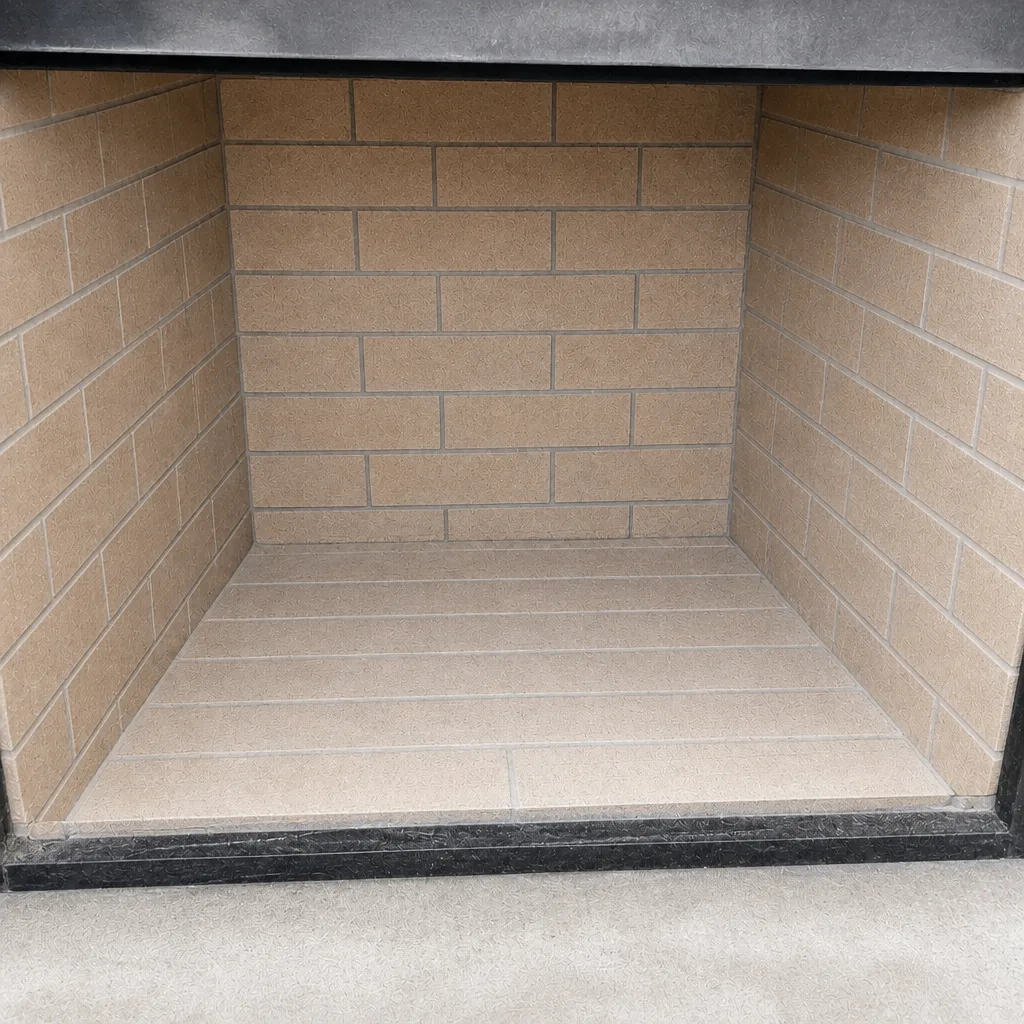
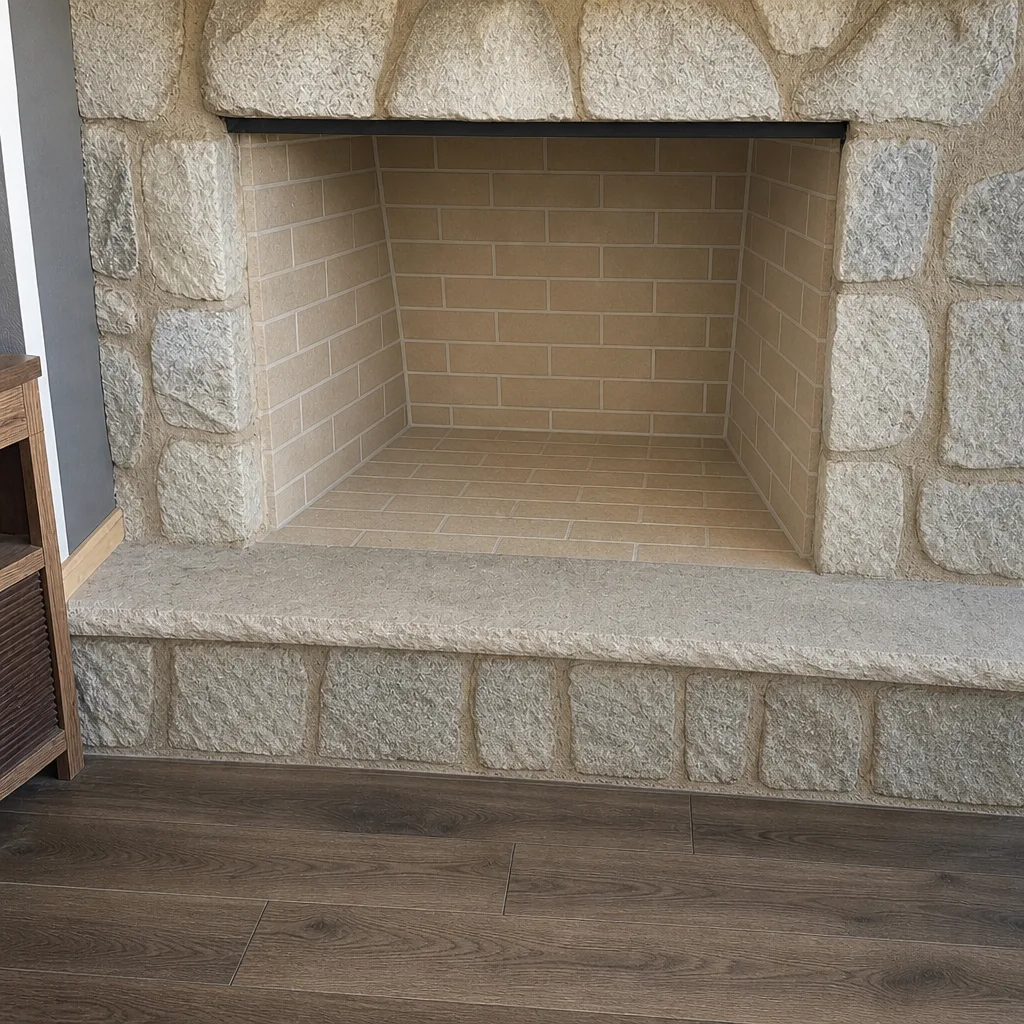
See the difference
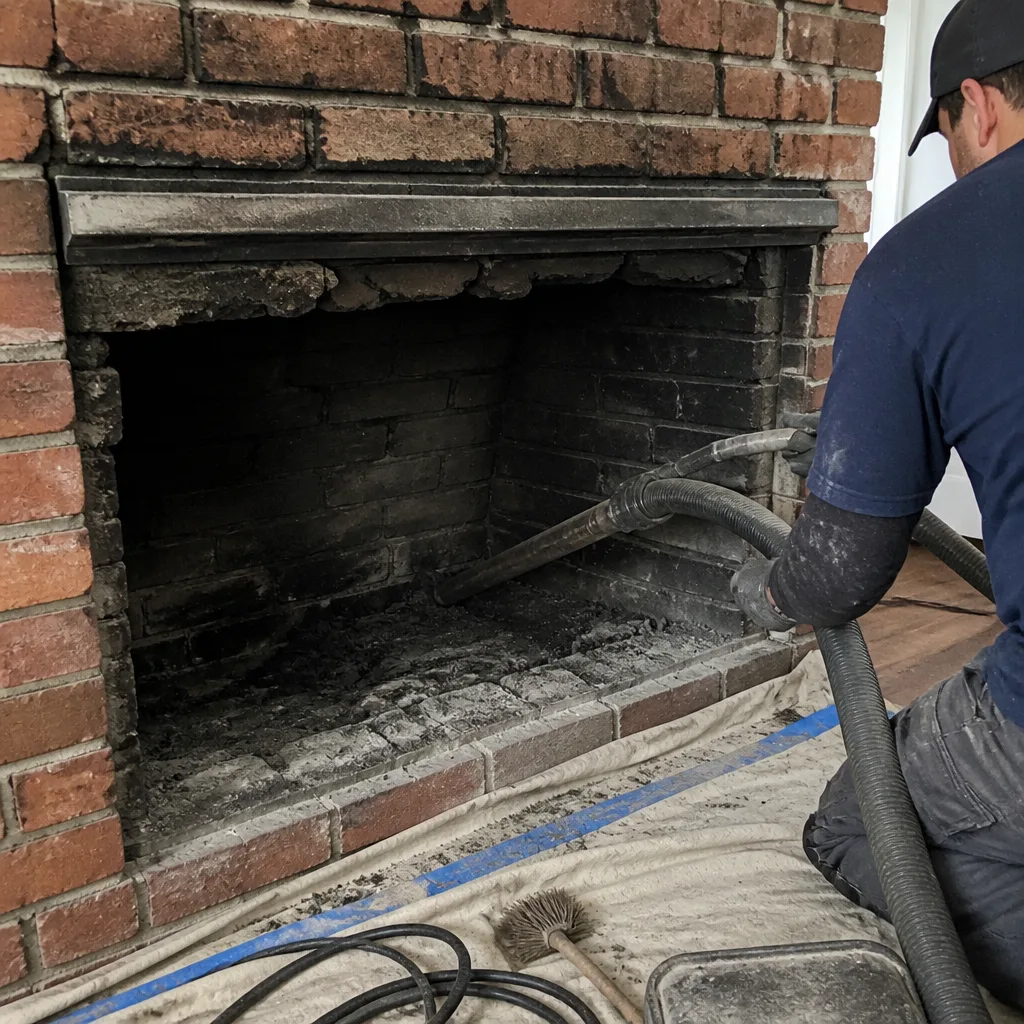 Before
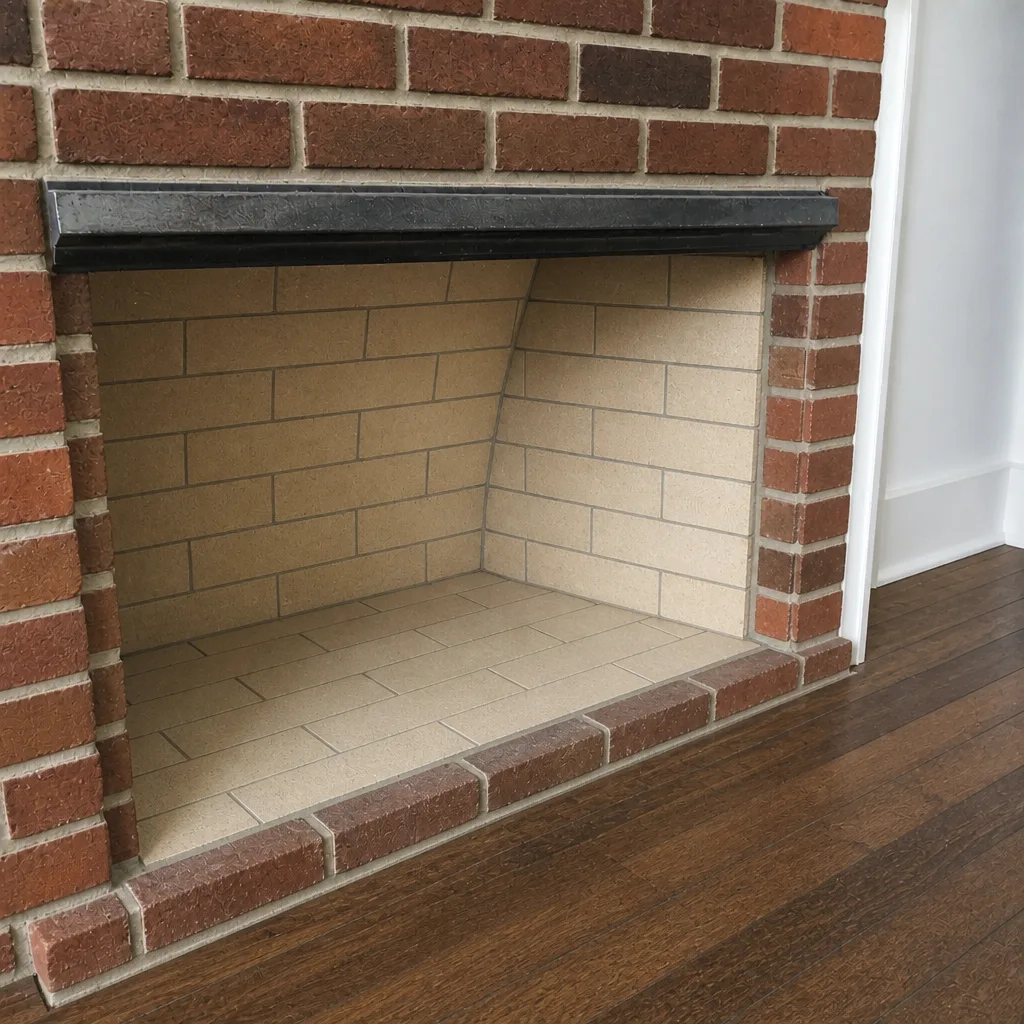 After
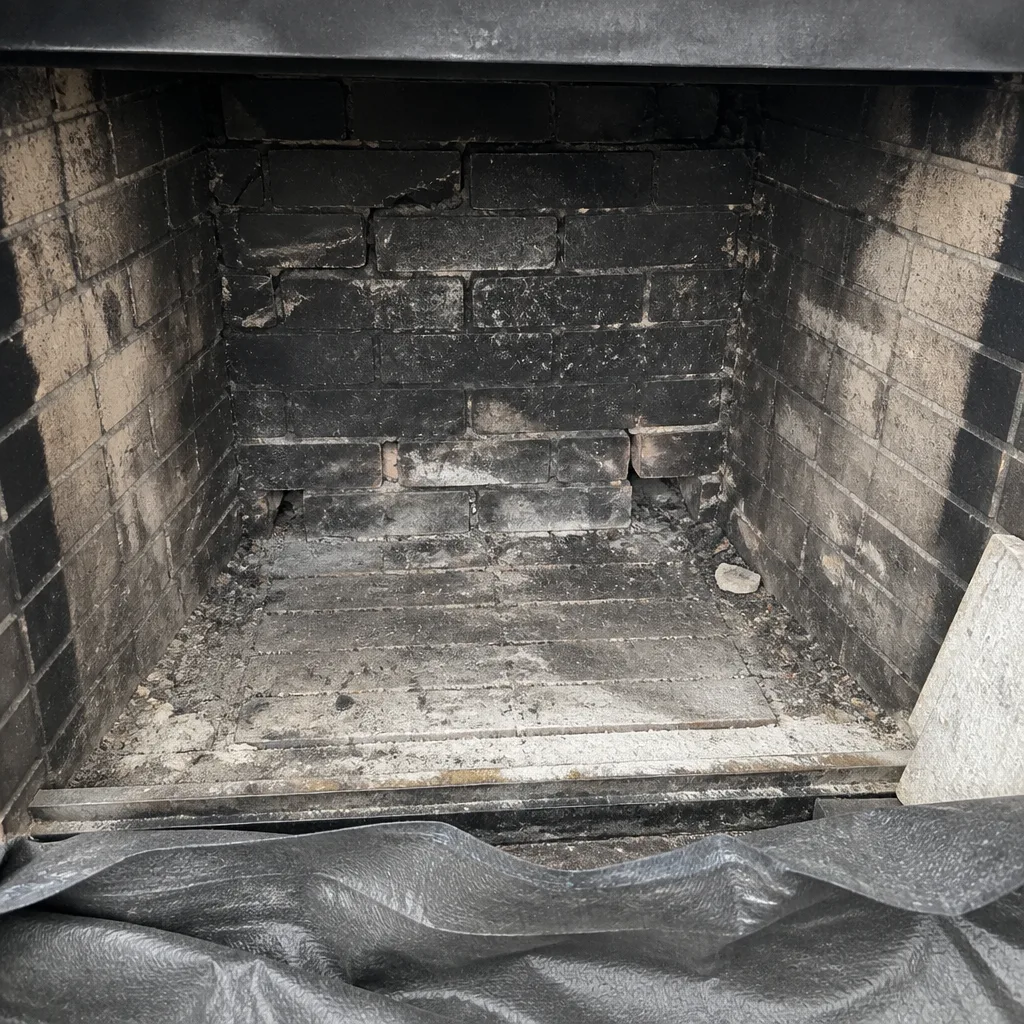 Before
 After
 Before
 After
Frequently Asked Questions
Once a year for most wood-burning fireplaces, or after roughly a cord of wood has been burned. Kirkland’s wet climate adds a reason to stay on schedule: moisture working on the masonry between cleanings is just as important to catch as creosote buildup inside. If you burn heavily or use unseasoned wood, get it checked more often. Call (833) 748-1365 for an exact quote, and estimates are free.
A routine cleaning typically runs from about $150 to $300, and a Level 2 inspection with camera is usually in the $250 to $400 range. The written estimate, agreed before the sweep is booked, sets the final price. When a report flags repairs, those are quoted separately and backed by camera evidence you can see. Call (833) 748-1365 for an exact quote, and estimates are free.
Only if the evidence shows one, and a liner replacement should never be recommended without photos of the damage. A cracked or deteriorated liner can leak smoke, heat, and carbon monoxide into the structure, so it’s a genuine safety matter when it’s real. If your report shows a problem, ask to see the images, and ask whether resurfacing with HeatShield would do the job first. Call (833) 748-1365 for an exact quote, and estimates are free.
Creosote accumulates, and in its glazed Stage 3 form it’s highly combustible. That’s the specific reason chimney fires happen, and it’s a real safety risk, not a scare tactic. The longer it sits, the harder it is to remove and the more likely the flue has degraded from moisture. Getting ahead of it is cheaper and safer than getting behind it. Call (833) 748-1365 for an exact quote, and estimates are free.
A gas insert still needs servicing, but the work is different from a wood flue sweep. The venting and firebox should be checked by a professional who understands gas appliances, and we schedule that as its own visit. Don’t run a gas appliance you’re unsure about, and don’t open the venting yourself. Call (833) 748-1365 for an exact quote, and estimates are free.
Because Kirkland’s climate is wet enough to grow it on a roofline and a stack, and moss on the masonry is a sign that moisture is being retained where it shouldn’t be. It’s worth having the crown, cap, and flashing looked at, since cracked crowns and missing caps are the usual culprits. The moss is a symptom; the seal is the fix. Call (833) 748-1365 for an exact quote, and estimates are free.
The Bottom Line
Chimney cleaning in Kirkland is about reading a system in its environment, not just brushing a flue. The creosote pattern tells you how you’re burning. The mortar, crown, and cap tell you how the wet climate is treating the structure. Match the inspection level to the situation, sort the report into urgent, preventive, and optional, and insist on evidence before approving a repair. A specialist who treats the chimney as a system, works with professional-grade materials like Gelco and Olympia Chimney components, and tells you when work can wait is worth more than the cheapest quote. That’s the approach that keeps a chimney safe for the long run.
Contact
Chimney Sweep Kirkland handles sweeping, inspection, fireplace repair, chimney repair, and cap and crown work as one specialist service, from the firebox to the crown. We don’t subcontract the pieces out; the same team you call for the sweep can read the whole system and show you what it finds. For a free estimate in Kirkland, call (833) 748-1365. We answer 24/7. Fast dispatch from 7am to 7pm, Sunday through Friday. Get on the calendar before the wet season and the fall rush, and start the cold months knowing your chimney is sound.
Written by the team at Chimney Sweep Kirkland.